
Flooding is a business risk: is your organisation prepared?
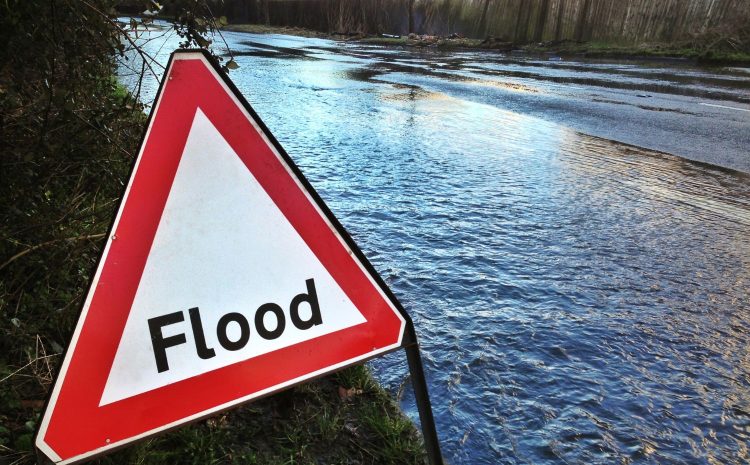
After weeks dominated by heat, drought and water shortages, businesses across parts of England are now facing a very different warning: heavy rain, thunderstorms and localised flooding.
It is a striking illustration of why climate resilience is increasingly about preparing for extremes rather than a single predictable risk.
July 2026 was the driest on record for England, receiving just 10% of its long-term average rainfall.1 The latest Environment Agency drought update still has around 71% of England by land in drought, with reservoir storage substantially below normal for the time of year.2
Yet on 27 August, heavy rain and thunderstorms moved through the Midlands, with the Met Office warning of localised flooding and Environment Agency flood alerts in place across several parts of the region. 3 4
Contradictory as that may sound, drought and flood risk can exist at the same time. Government drought guidance explains that intense summer rainfall can run rapidly over dry, hard or compacted soils rather than soaking into them, contributing to flash flooding. A few heavy downpours do not necessarily end a drought either: groundwater, rivers and reservoirs may require prolonged rainfall to recover.5
For businesses, that rapid shift is an important reminder. Flooding is not simply a property problem. It can become a financial, operational and business-continuity risk.
How significant is flood risk in England?
The Environment Agency’s latest National Flood Risk Assessment shows that around 6.3 million homes and businesses in England are in areas at risk of flooding from rivers, the sea, surface water or a combination of these.6
Around 4.6 million properties are in areas at risk specifically from surface-water flooding – the type that can occur when intense rainfall overwhelms drainage systems, including in places nowhere near a river. With climate change, the total number of properties in areas at risk could rise to around eight million by the middle of the century – around one in four properties in England.7
For businesses, the exposure extends beyond whether water enters the building. Flooding can close access roads, prevent employees reaching work, disrupt power or telecommunications, delay deliveries and affect critical suppliers.
Flooding has a measurable financial impact
Bank of England research published in June 2026 provides useful evidence of what flooding can mean at company level.
Researchers combined information on UK business premises with flood maps and company financial records. They found that flood events significantly increased the likelihood of business closure among small and medium-sized firms. For businesses that survived a flood, the research also identified negative effects on revenue, employment and total assets.8
That moves flooding firmly beyond facilities management. It is a financial resilience issue.
Why insurance deserves attention
Insurance can help transfer risk, but it cannot remove the physical risk itself.
For commercial organisations there is an important distinction: Flood Re, the government-backed scheme designed to improve the availability and affordability of flood insurance for eligible homes, does not generally cover commercial or business properties.9
Businesses therefore need to understand their own arrangements. What flood cover is in place? What are the excesses and exclusions? Does the policy include business interruption? Are stock, equipment and temporary premises adequately covered?
These are considerably easier questions to address before a flood than afterwards.
What does business flood resilience look like?
Appropriate measures depend on the property, location and source of the risk. They can include flood-resistant doors or barriers, non-return valves, raising electrical equipment, moving critical stock, pumps, improved drainage, sustainable drainage and a documented flood response plan.
A government review published in May 2026 brought together the evidence around Property Flood Resilience and its role in helping homes and businesses reduce the impact of flooding and recover more effectively.10
But resilience should extend beyond the building itself. Businesses should also consider:
- Premises: can employees and customers safely access the site?
- Power and IT: what happens if local infrastructure or connectivity fails?
- Transport: which roads and routes are critical?
- People: could employees work elsewhere if the site were inaccessible?
- Suppliers: which suppliers could stop operations if they were unable to deliver?
- Stock and equipment: what is vulnerable at ground level?
This turns flood resilience from a property question into a business-continuity exercise.
A particular consideration for Midlands businesses
The Midlands’ concentration of manufacturing, logistics, warehousing and distribution makes interconnected infrastructure particularly important.
Industrial estates may share drainage and access routes. Manufacturers depend on just-in-time deliveries. Logistics businesses rely on road networks. Employees may commute considerable distances.
The latest conditions also underline why businesses should check surface-water risk as well as river and coastal flood risk. Surface-water flooding can develop quickly and does not require a business to be situated next to a river.
A particularly relevant issue for the Midlands
The Midlands combines significant manufacturing, logistics, agriculture and food production with growing housing and industrial demand. It also depends heavily on interconnected infrastructure.
Water resilience therefore cannot be solved by individual businesses alone. Water companies, businesses, regulators, local government, landowners and communities all have a role.
That need for collaboration is one reason the Future of our Waters is one of the major conversations taking place at Climate Expo 2026 next month.
But businesses do not need to wait for a major infrastructure solution before acting.
Understanding water consumption, identifying dependencies and putting contingencies in place are practical steps available now.
Five things businesses can do now
1. Know your exposure
Check current and future flood risk for your premises, including surface-water flooding.
2. Calculate the real cost of disruption
Include downtime, cancelled orders, lost productivity, temporary premises, damaged stock and supply-chain effects – not simply physical damage.
3. Review insurance
Understand what is covered, what is excluded and whether business-interruption protection is adequate.
4. Identify proportionate resilience measures
Consider what could prevent water entering the building, reduce damage if it does and enable faster recovery.
5. Test the business-continuity plan
Ask what you would actually do if staff could not access the premises tomorrow morning.
Resilience is about preparing for volatility
Perhaps the most useful lesson from this summer is not simply that businesses should prepare for drought, heat or flooding. It is that they increasingly need to prepare for volatility.
Within weeks, the conversation has moved from record-low rainfall and water shortages to intense downpours and flood warnings, while much of England technically remains in drought.
That does not mean every organisation should prepare for every conceivable climate scenario. It means understanding which parts of the business are vulnerable, which dependencies are critical and what practical steps could reduce disruption.
Because when flooding affects premises, people, infrastructure or supply chains, the consequences stop being simply environmental.
They become business consequences.
- https://www.gov.uk/government/publications/water-situation-national-monthly-reports-for-england-2026/water-situation-july-2026-summary ↩︎
- https://www.gov.uk/government/publications/dry-weather-and-drought-in-england-2026-summary-reports/dry-weather-and-drought-in-england-14-to-20-august-2026 ↩︎
- https://weather.metoffice.gov.uk/forecast/regional/wm ↩︎
- https://check-for-flooding.service.gov.uk/alerts-and-warnings ↩︎
- https://www.gov.uk/government/publications/drought-management-for-england/drought-how-it-is-managed-in-england ↩︎
- https://www.gov.uk/government/publications/national-assessment-of-flood-and-coastal-erosion-risk-in-england-2024/national-assessment-of-flood-and-coastal-erosion-risk-in-england-2024 ↩︎
- https://www.gov.uk/government/publications/national-assessment-of-flood-and-coastal-erosion-risk-in-england-2024/national-assessment-of-flood-and-coastal-erosion-risk-in-england-2024 ↩︎
- https://www.bankofengland.co.uk/working-paper/2026/staying-afloat-the-impact-of-flooding-on-uk-firms ↩︎
- https://www.floodre.co.uk/embed-eligibility-tool/ ↩︎
- https://www.gov.uk/flood-and-coastal-erosion-risk-management-research-reports/property-flood-resilience-evidence-synthesis-and-gap-analysis ↩︎